I need a plan

dodgechargerfan

In a 55 gallon drum, floating down river, and
Staff member
And probably some motivation.

I just mapped out my vacation time for the rest of the year and it's a bit ridiculous.
So, I feel like I really need to go gang busters in the garage.

The first step will be to organise it so that I can actually work, but if I have a specific job in mind when I start cleaning, I think that will help me get there.

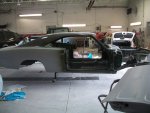
So, keeping in mind that I will want to go through the major components before I install them, what should I get on the Charger first?

Rear end?
 
Last edited:
Yeah I would get the major suspension components, front K-frame and suspension, and rear springs and axles, so you can get a set of tires on it and can push and steer it by hand.
 
I'm guessing your Charger is a stripped out shell? Cows is dead on.. suspension, and brakes while you're at it.
 
I'd start with the rear suspension and axle and get the fuel system and brake lines in place.
Then the front suspension...
 
It really doesn't make much difference whether you start at front or rear, but you always go suspension, brakes, drive train. It's like building a house. You always build the foundation first. :cool:
 
It really doesn't make much difference whether you start at front or rear, but you always go suspension, brakes, drive train. It's like building a house. You always build the foundation first. :cool:

I like that analogy. :2thumbs:
 
I'd start with the headliner. Might as well get the one job guaranteed to piss you off out of the way. :D

Actually if you're going to work on the car itself, the first thing I'd install would be all your hard lines, fuel and brake. Next I'd install the fuel tank assembly. Those things will go more easily without the suspension bits in the way. Next I'd plumb the rear axle brakes, including the hose, and complete the brakes and remainder of the axle. Once that's ready, on to assembling the rear suspension.

If you're a little more pressed for space, I'd suggest assembling as much of the front suspension as possible to the K-member: lower control arms and strut rods, shocks (lower mount), swaybar if possible, maybe even the knuckles and uppers (although the upper ball joints are much easier to install or replace with the control arm already mounted to the car). I'm not 100% positive but I think you can do most of the swaybar, too (not sure on the taxicab-era cars). Doing as much of that as possible beforehand and lifting it into place as a partial assembly decreases the "head in a fender opening" and undercar time significantly. You can also work in a much smaller space to accomplish a lot of it, since the body doesn't need to be there to do it.
 
Good info. The hard lines is one of the things that I've been mulling over for too long. I wasn't sure if it made sense to do those first or to have the rear end done so it's there to route to and around....

My general goal is to get stuff on the car so that it's no longer in my way.
At the same time, I want to go through the major stuff.

So, I want to go through the rear end, for example, and then when it's all done, install it on the car.
When I get to the interior, I'll redo the seats and put them in.
etc.
etc.


and yes, I should have been doing these things while the body was out.
 
I tried to give you as much time as possible...;]

NO ONE gets stuff done while they have the opportunity. That would take all the adventure out of it...

:D


The argument that I used with my wife was that once I finished something, if it didn't get installed on the car, it would have live somewhere nicer than the garage.

She actually suggested that do up the seats and mount them on wooden rails and use them as low-to-the-ground seating in the rec room.
I like that idea but I don't like the idea of all the wear and tear on seats that aren't even in the car yet!
 
I would install the lines first. Its much easier to run them when there is nothing in the way. Next I would install the fuel tank. I would then get the rear axle ready to go in. By that I mean get it rebuilt and painted then completely assembled from drum to drum, including brake lines, leaf springs, shackle, and front spring hangers. Remember to NOT tighten the spring hanger eye and shackle bolts until the full weight of the car is on them. Tightening them before there is weight on them will introduce a bind in the bushings. I would then focus on the front K-frame. I would assemble as much of it as possible before I put it in. I would do the steering column next. Now that it is a "roller" I would install the wiring harness.
 
I would install the lines first. Its much easier to run them when there is nothing in the way. Next I would install the fuel tank. I would then get the rear axle ready to go in. By that I mean get it rebuilt and painted then completely assembled from drum to drum, including brake lines, leaf springs, shackle, and front spring hangers. Remember to NOT tighten the spring hanger eye and shackle bolts until the full weight of the car is on them. Tightening them before there is weight on them will introduce a bind in the bushings. I would then focus on the front K-frame. I would assemble as much of it as possible before I put it in. I would do the steering column next. Now that it is a "roller" I would install the wiring harness.


This sounds eerily familiar... :D
 
Well, I got the axles out of the rear end that year.
That’s about it.
Impending doom on the job front, at the time, took a lot of wind out of the car funds.

I think now is the time to get a kit and rebuild it.
 
When sourcing parts for the axle, you've got two options in my opinion: Timken, or the cheapest crap the local parts store has--which is what you'll probably get in a kit. The reason I say this is because I've actually had better luck with our store-brand Parts Master bearings than I've had with National (formerly BCA), which is what most parts houses carry. Less warranties, believe it or not, over 14 years of dealing with both from my current supplier. In fairness, the problem with National tends to lie with bearings/races that are sold separately--not an issue with your wheel bearings, but definitely a concern with carrier bearings & races. My best guess, actually proposed by a customer with repeated National failures, was that the bearings came from India and the races from Pakistan, and there was some kind of material mismatch.

"Local parts store" is italicized above, because when dealing online, all bets are off. "Chinese is Chinese" stands to reason, but the option of being able to throw broken parts at someone in person is both gratifying for you and a real fear for me.

Timken is far and away the best--and what was OE--but not everyone offers it. In the case of an A833 input bearing (307L), the difference in my store cost was $24(!) between PM and Timken. Many of the vintage-application Timken parts are also still made in the US or at least North America.

If you need part numbers for this stuff, hit me up. I'll go all "Brother Maynard" on you, and consult the Book of (axle) Armaments, a.k.a. my big blue axle book--a three-ring binder I compiled with literally everything there is to know about Mopar RWD rear axles, including part numbers, axle-shaft lengths, spring-perch widths, etc.
 
I think I was looking at Dr Diff when I was shopping.
They offer Timken and Koyo as a choice when ordering.
 

SiteLock

SiteLock
Back
Top