
Dr.Jass
Pastor of Muppets
Even if you don't think you're familiar with his work, the world has lost a true automotive hero: Brock Yates passed away Wednesday from complications of Alzheimer's. He was 82.
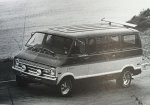
He wrote for Car and Driver magazine for over 40 years, earning the nickname "The Assassin" early on, due to his fearless assaults on the auto and insurance industries, and mediocrity in general. He wrote for other publications in non-automotive capacities, although with the same bent against anything simply run-of-the-mill. He also published several books, one of which is the true story of the Cannonball Baker Sea-to-Shining-Sea Memorial Trophy Dash as told by Yates and dozens of other participants. He was well-equipped to write it, since he is the person that single-handedly invented the Cannonball Run, as it came to be known. He, along with Dan Gurney (we know him for the AAR 'Cuda) won the first race in 1971. Yates also wrote the screenplay for the first movie; though heavily embellished, the movie was based on real participants and events--Yates himself and Hal Needham (who made the original Gone in 60 Seconds) did in fact race a "700HP" 440-powered ambulance capable of 130MPH cruise speeds in the '79 event. The actual ambulance was used in the movie. Yates later morphed the Cannonball into the very successfull One Lap of America, equally silly but no less competitive.
He was an asshole's asshole: Brash, outspoken, and most-often right. He correctly predicted the fall of the American auto industry in 1968--two years prior to my arrival on this Earth. He railed against the insurance industry's meddling in the auto industry, and was an outspoken and brutal critic of Ralph Nader and his ilk. He mourned the loss of "real" racing, as sponsors and safety turned nearly every version of motorsport into mere parades. As Brock's career with Car and Driver tapered away, so did my interest in that publication. It was slowly becoming just another industry shill rag, like longtime rival (and often-belittled) Motor Trend, whose "Car of the Year" award Yates and C&D famously outed decades ago as being for sale to the highest bidder. The brutal honesty and harsh commentary in their road tests began to diminish, and with those went the appeal.
Brock Yates was an excellent and interesting writer, a racer, a lover of cars and an automotive renaissance man. He did it all, and he did all of it well.
Generally speaking, celebrity deaths don't bother or affect me. This one truly does, as it should any lover of performance motoring. I didn't always agree with him--often outright hated what he had to say--but I considered his articles must-reads. The man's legacy and body of work are nothing short of amazing. They don't make guys like him anymore, and it's a damned shame.
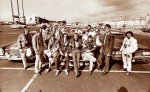
This photo, taken at the Redondo Beach finish of the 1972 Cannonball, features Yates front and center, leaning against the hood of that year's second-place car, a '72 Challenger Rallye 340 driven by he and Bob Brown. That same car, bought new by Yates and still owned at his death, took third in '75. The Coupe de Ville to the right was the overall winner in '72; the Benz 280 SEL co-piloted by Pete Brock (designer of both the Shelby Cobra and Daytona Coupe) to the left was third.
He wrote for Car and Driver magazine for over 40 years, earning the nickname "The Assassin" early on, due to his fearless assaults on the auto and insurance industries, and mediocrity in general. He wrote for other publications in non-automotive capacities, although with the same bent against anything simply run-of-the-mill. He also published several books, one of which is the true story of the Cannonball Baker Sea-to-Shining-Sea Memorial Trophy Dash as told by Yates and dozens of other participants. He was well-equipped to write it, since he is the person that single-handedly invented the Cannonball Run, as it came to be known. He, along with Dan Gurney (we know him for the AAR 'Cuda) won the first race in 1971. Yates also wrote the screenplay for the first movie; though heavily embellished, the movie was based on real participants and events--Yates himself and Hal Needham (who made the original Gone in 60 Seconds) did in fact race a "700HP" 440-powered ambulance capable of 130MPH cruise speeds in the '79 event. The actual ambulance was used in the movie. Yates later morphed the Cannonball into the very successfull One Lap of America, equally silly but no less competitive.
He was an asshole's asshole: Brash, outspoken, and most-often right. He correctly predicted the fall of the American auto industry in 1968--two years prior to my arrival on this Earth. He railed against the insurance industry's meddling in the auto industry, and was an outspoken and brutal critic of Ralph Nader and his ilk. He mourned the loss of "real" racing, as sponsors and safety turned nearly every version of motorsport into mere parades. As Brock's career with Car and Driver tapered away, so did my interest in that publication. It was slowly becoming just another industry shill rag, like longtime rival (and often-belittled) Motor Trend, whose "Car of the Year" award Yates and C&D famously outed decades ago as being for sale to the highest bidder. The brutal honesty and harsh commentary in their road tests began to diminish, and with those went the appeal.
Brock Yates was an excellent and interesting writer, a racer, a lover of cars and an automotive renaissance man. He did it all, and he did all of it well.
Generally speaking, celebrity deaths don't bother or affect me. This one truly does, as it should any lover of performance motoring. I didn't always agree with him--often outright hated what he had to say--but I considered his articles must-reads. The man's legacy and body of work are nothing short of amazing. They don't make guys like him anymore, and it's a damned shame.
This photo, taken at the Redondo Beach finish of the 1972 Cannonball, features Yates front and center, leaning against the hood of that year's second-place car, a '72 Challenger Rallye 340 driven by he and Bob Brown. That same car, bought new by Yates and still owned at his death, took third in '75. The Coupe de Ville to the right was the overall winner in '72; the Benz 280 SEL co-piloted by Pete Brock (designer of both the Shelby Cobra and Daytona Coupe) to the left was third.
Last edited: